5 Nov 2026
Shifting Dynamics of Roulette Wheel Manufacturing Standards Across International Factories

Factories producing roulette wheels have adjusted their processes over recent decades as regulatory requirements and technological capabilities evolved in different regions, and these changes reflect varying approaches to precision engineering and material sourcing that affect wheel balance and randomness. Manufacturers in Europe, North America, and Asia operate under distinct frameworks that dictate tolerances for wheel diameter, pocket depth, and rotor weight, while data from industry reports show that compliance often requires specialized machinery calibrated to fractions of a millimeter.
Regional Variations in Production Requirements
European facilities historically emphasized hand-finished wooden rotors paired with brass fittings, yet automation has increased since the early 2000s because suppliers needed consistent output for multiple casino markets. In contrast, North American plants adopted computer-numerical-control milling earlier, which allowed tighter specifications on frets and ball tracks according to guidelines from the Nevada Gaming Control Board. Asian production centers, particularly those in China and Vietnam, integrated high-volume injection molding for certain plastic components while maintaining separate lines for premium wooden models destined for regulated venues.
Observers note that these geographic differences create supply-chain complexities because a wheel certified in one jurisdiction may require rebalancing before export. Research from the University of Nevada, Reno gaming laboratory indicates that minor deviations in pocket angle can influence ball behavior over thousands of spins, which explains why certification bodies demand detailed documentation of every manufacturing batch.
Material Sourcing and Quality Controls
Steel bearings and phenolic resins remain core elements across most facilities, although sourcing patterns shifted after 2018 when tariffs altered cost structures for raw materials imported from specific countries. Factories now track supplier certifications more rigorously, and many have implemented traceability systems that log the origin of each timber blank used in the wheel body. Those systems help meet audit demands from international gaming associations that require proof of consistent hardness ratings and moisture content to prevent warping during transport.
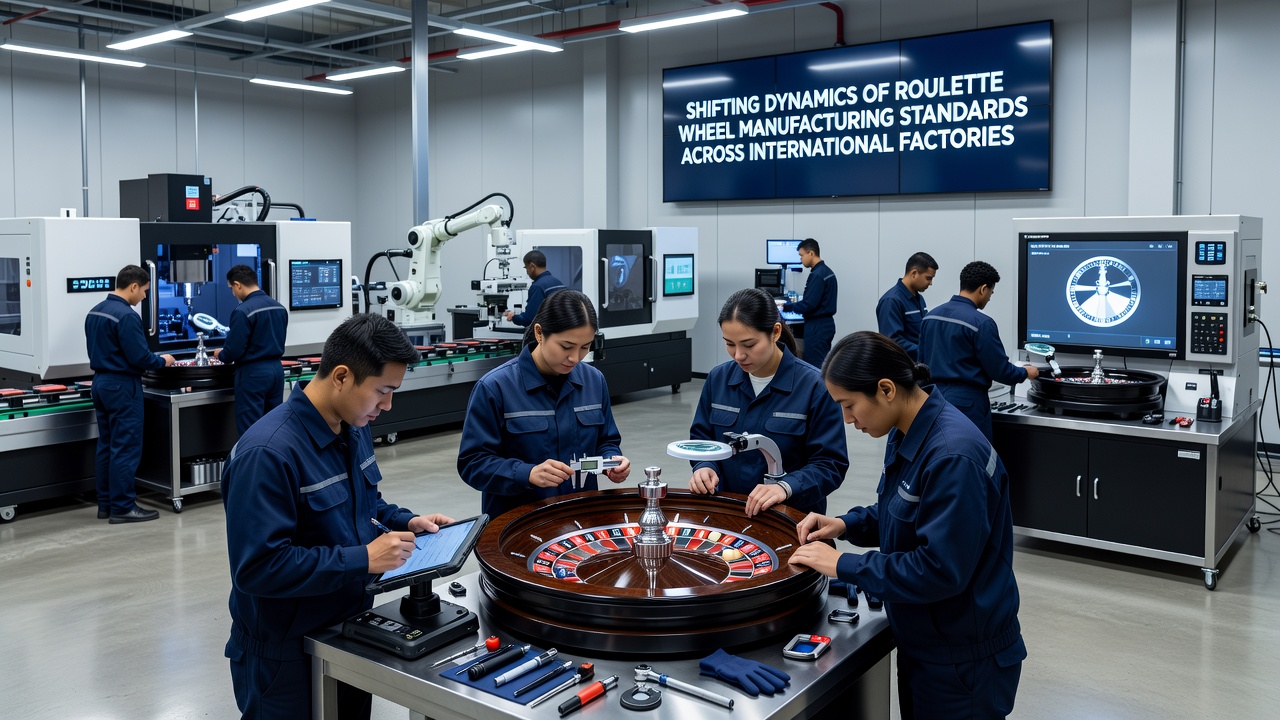
By November 2026 several major producers had begun testing composite materials that combine carbon fiber with traditional hardwoods, a move driven by requests from operators seeking lighter rotors that still meet durability thresholds. Figures from the European Gaming and Amusement Association reveal that adoption rates for these composites reached approximately twelve percent of new wheel orders placed that year, while traditional oak and mahogany models continued to dominate replacement markets in established casinos.
Technological Integration and Certification Processes
Digital scanning tools now verify rotor trueness before wheels leave the assembly line, and this step replaces older manual checks that relied on spirit levels and visual inspection. Automated systems flag any deviation exceeding 0.05 millimeters, which reduces the chance of downstream performance issues once wheels reach casino floors. Certification timelines have shortened in some regions because regulators accept electronic test reports uploaded directly from factory equipment, provided the machinery itself undergoes periodic third-party calibration.
Yet the transition has not been uniform. Facilities in jurisdictions with less stringent oversight still perform a larger share of quality checks manually, and this variation creates ongoing discussion among casino procurement teams about acceptable risk levels. Industry data compiled by the Canadian Gaming Association shows that wheels produced under fully digitized protocols experienced twenty-three percent fewer returns for balance adjustments during their first year of use compared with those relying on mixed inspection methods.
Supply Chain Adjustments and Future Outlook
Global events since 2020 prompted many factories to diversify their supplier networks, which in turn influenced how quickly new standards could be implemented across sites. Lead times for custom wheel orders lengthened temporarily because certain specialty alloys faced allocation restrictions, forcing production planners to maintain larger safety stocks of critical parts. Those adjustments stabilized by mid-2025, allowing manufacturers to refocus on incremental improvements in surface finishing techniques that reduce friction between the ball and the track.
Academic papers published in the Journal of Gambling Studies have examined how these manufacturing refinements correlate with long-term wheel performance metrics collected from live casino environments. The studies found measurable consistency gains when factories maintained strict environmental controls over humidity during final assembly, a practice now embedded in updated protocols at several international locations.
Conclusion
Manufacturing standards for roulette wheels continue to adapt as factories balance regulatory demands, material availability, and technological capabilities across borders. Data from multiple oversight bodies and research institutions demonstrate that precision remains the central requirement, while regional differences in approach persist. Continued monitoring of certification outcomes and material innovations will shape how these standards evolve in coming years.